
Ultimate Guide to Sailing Clubs UK: Find, Join & Learn
Estimated reading time: 15 minutes
Key Takeaways
- Joining a sailing club UK connects you with community, training and sailing opportunities in both coastal and inland venues.
- Membership benefits include water access, club boats, training, racing, social events and youth programmes.
- The process to join a sailing club UK involves research, trial sessions, application and early involvement.
- Sailing lessons UK range from beginner dinghy courses to advanced Yachtmaster qualifications through RYA-accredited centres.
- Youth sailing UK offers structured junior sessions, holiday camps and clear progression into competitive squads.
- Stay informed with sailing club news via club newsletters, national associations and social media channels.
Table of Contents
- Introduction
- Section 1: Overview of Sailing Clubs UK
- Section 2: How to Join a Sailing Club UK
- Section 3: Sailing Lessons UK
- Section 4: Youth Sailing UK
- Section 5: Sailing Club News
- Conclusion & Next Steps
- Checklist: 5 Questions to Ask Before You Join a Sailing Club
- Top Sailing Clubs UK by Region
- Quick Glossary of Sailing Terms for Beginners
Introduction
Sailing clubs UK are one of the best ways to get on the water, no matter where you live or how much experience you have. Whether you are a complete beginner or an experienced sailor looking for a new home, there is almost certainly a club near you that fits your budget and your goals.
Clubs are not just about sailing. They are about community. You will find structured skills development, clear pathways for young sailors, regular racing, social events and a way to stay connected with everything happening in the sailing world.
From small dinghies on inland reservoirs to ocean-going yachts on the Solent, sailing clubs UK cater to every age, ambition and sailing style. This guide covers everything you need to know: how to find a club, how to join, what lessons are available, what youth programmes exist and how to keep up with the latest news.
Section 1: Overview of Sailing Clubs UK
What Is a Sailing Club?
A sailing club (also called a yacht club) is a sports club dedicated to sailing and yachting. It typically offers organised sailing, racing, training and social activities for its members.
Historically, yacht clubs focused on larger yachts, while sailing clubs catered to dinghies and smaller boats. Today, most UK clubs host a mix of both. You will find fleets of dinghies sitting alongside keelboats and cruising yachts at many venues across the country.
For a deeper look at available fleets, see the boats for sale UK guide.
Coastal vs Inland Venues
One of the great things about sailing clubs UK is how spread out they are. You do not need to live by the sea to sail.
Coastal clubs include:
- Island Sailing Club in Cowes — home of the famous Cowes Week regatta
- Brading Haven Yacht Club on the Isle of Wight
- Exe Sailing Club in Exmouth, Devon
Inland clubs include:
- Fishers Green Sailing Club in the Lee Valley
- Ely Sailing Club in Cambridgeshire
- Dozens of clubs on lakes, gravel pits and reservoirs near major cities
Whether you want open sea sailing, estuary cruising or sheltered lake racing, there is a venue that suits you.
Explore the best marinas and discover more sailing clubs.
Key Benefits of Club Membership
Joining a sailing club gives you access to far more than just water. Typical membership benefits include:
- Water access and facilities — slipways, jetties, clubhouses, changing rooms and safety cover
- Club boats — many clubs have dinghy or keelboat fleets that members can use, sometimes included in a “gym-style” membership
- Training and coaching — most clubs are RYA training centres or run RYA-based sessions, from beginner courses to race coaching
- Regular racing and events — club racing series, regattas, cruising rallies and open meetings
- Social life — bar nights, dinners, talks, volunteer days and a wider sailing community
- Family and youth options — discounted junior memberships and family packages
Membership fees are often less expensive than people expect. According to Sunsail, the average cost is around £150 per year, with discounts available for young sailors, families and seniors. Some clubs start from as little as £60 per year. More details at Premier Boating sailing clubs and the RYA club finder.
Section 2: How to Join a Sailing Club UK
Step-by-Step Guide to Join a Sailing Club UK
If you want to join a sailing club UK, the process is straightforward. Here is a simple step-by-step guide:
- Step 1: Research local clubs
Use national directories such as the RYA club finder or specialist listing sites to find clubs near you. Search by location, boat type and sailing style to narrow down your options. RYA club finder, Go-Sail directory, Premier Boating sailing clubs. - Step 2: Check the club’s focus and facilities
Look at whether the club is primarily dinghy, keelboat or yacht-oriented. Check what type of water it uses — sea, estuary, lake or reservoir — and what facilities are on offer, including training, boat storage and social spaces. Yacht clubs in the UK, Sunsail sailing clubs. - Step 3: Contact the membership secretary
Most clubs list their membership contact details on their website. Get in touch to ask about membership categories, annual fees, waiting lists and any joining requirements. Premier Boating sailing clubs, RYA club finder. - Step 4: Attend an open day or trial session
Many clubs run taster sessions, open days or informal trial sails. These are a great way to experience the atmosphere, meet current members and decide whether the club feels right for you before committing. Best UK sailing clubs, Sunsail sailing clubs. - Step 5: Choose a membership category and apply
Complete the membership application, select the right tier for your situation and arrange payment. Most clubs accept online applications through their website. Sunsail sailing clubs, RYA club finder. - Step 6: Get involved early
New members are usually encouraged to join training sessions, take part in club racing or sign up to volunteer. Some clubs reduce membership fees for members who help with safety boat cover, race officiation or galley duties. Sunsail sailing clubs, RYA club finder.
Typical Membership Tiers and Fees
When you join a sailing club UK, you will usually find several membership categories to choose from:
- Individual adult
- Family or household
- Junior or youth
- Student or university
- Crew or non-boat-owning member
- Senior or retired
Typical costs:
– Entry-level memberships start from around £60 per year
– The national average is approximately £150 per year
– Additional costs may apply for boat storage, mooring fees, club boat hire or training courses
Sources: Sunsail, Premier Boating sailing clubs, RYA club finder.
How to Choose the Right Club
Not every sailing club will suit every sailor. Here are the key factors to consider before you decide where to join:
- Location — How far is the club from your home or workplace? Coastal or inland?
- Type of sailing — Dinghy racing, keelboat cruising, offshore yacht racing or casual social sailing?
- Training provision — Does the club offer RYA courses, race coaching or a junior programme?
- Facilities and equipment — Club boats, safety cover, quality of the clubhouse and changing rooms
- Club culture — Family-friendly or performance-focused? How active is the social calendar? How much volunteering is expected?
- Cost and value — What does the membership fee actually include? Are boats, moorings and training discounts included?
Visiting in person during a race evening or club training session is the best way to judge whether a club feels like the right fit for you.
Learn more at Sunsail, RYA club finder, Premier Boating sailing clubs.
Section 3: Sailing Lessons UK
Types of Sailing Lessons UK
Sailing lessons UK are available at all levels, from complete beginners to advanced racers and offshore skippers. The main types include:
- Beginner or “learn to sail” courses — basic boat handling, water safety and building confidence in small dinghies
- Intermediate and advanced training — improving technique, racing skills, navigation and seamanship
- Boat-type specific lessons:
• Dinghy courses (single-handed and double-handed)
• Keelboat and small yacht handling
• Offshore yacht cruising and race training
Most UK clubs and training centres offer structured course series so you can progress step by step from a first taster through to advanced qualifications. See Best UK sailing clubs, Sunsail, Premier Boating sailing clubs.
Accreditation and Certification Pathways
Most structured sailing instruction in the UK follows frameworks set by recognised bodies:
- Royal Yachting Association (RYA)
– National Sailing Scheme for dinghies (Levels 1–4)
– Keelboat and yacht cruising schemes
– Instructor training programmes
– Day Skipper and Yachtmaster qualifications - Irish Sailing (ISA)
– Relevant on or near Ireland
– Schemes align closely with RYA framework
RYA-recognised centres deliver courses leading to certificates recognised nationally and internationally. See Sunsail, Best UK sailing clubs, Sports Clubs directory, RYA club finder.
Costs and Seasonal Considerations
Costs for sailing lessons vary by boat type, course duration and location:
- Club-based beginner courses — often competitively priced or subsidised by volunteers
- Commercial schools and intensive yacht courses — higher cost for multi-day residential training
- Peak season — spring to early autumn for best weather and daylight
- Winter theory and shore-based training — many clubs offer off-season programmes
Check local club websites and RYA-recognised listings for up-to-date pricing: Sunsail, Sports Clubs directory, Premier Boating sailing clubs, RYA club finder.
Lessons Within Clubs vs Standalone Schools
You can access sailing instruction in two main ways:
- Within a sailing club
– RYA courses at lower cost for members
– Lessons integrated with racing and social life
– Clear pathway from training into regular participation - At a standalone school or commercial centre
– Dedicated fleets and sometimes residential options
– Suited for intensive yacht qualifications
– Ideal for Day Skipper or Yachtmaster training
Many start with club-based dinghy courses and later use commercial schools for offshore qualifications. See Best UK sailing clubs, Sunsail, LCSC overview.
Section 4: Youth Sailing UK
Junior and Youth Sections in Clubs
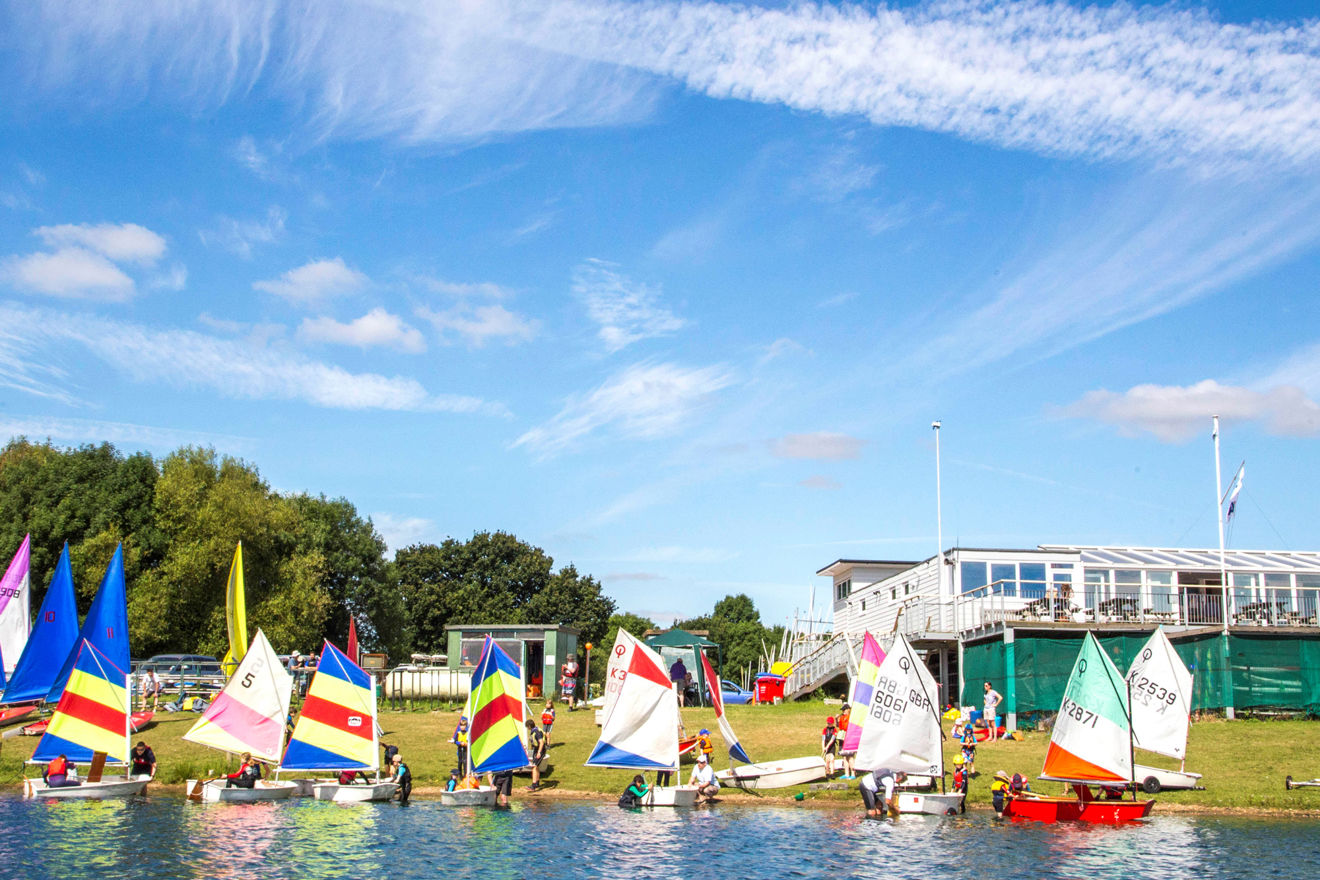
Youth sailing UK is a major priority for most clubs. Junior sections often form the heart of a club’s future, with offerings such as:
- Regular junior training sessions for children and teenagers, often at weekends
- Family-friendly racing and coaching tailored to mixed experience levels
- Discounted youth memberships to keep sailing accessible
Clubs with RYA Champion Club status typically run strong junior programmes, regional competitions and progression routes. Sailing builds confidence, communication and leadership. Parents value junior membership as a genuine investment in personal development.
Learn more: Sunsail, Premier Boating sailing clubs, RYA club finder.
Holiday Courses, Camps and Scholarships
During school holidays, options include:
- School holiday courses — intensive learn-to-sail weeks or multi-day camps
- Summer sailing camps — on-the-water sessions plus outdoor activities
- Scholarships and supported places — by clubs, charities and training organisations to widen access
Bookings via local clubs or training centres. RYA-schemed courses ensure consistent standards. See Best UK sailing clubs, Sunsail, Sports Clubs directory, Premier Boating sailing clubs.
Progression from Junior to Adult or Competitive Sailing
Youth sailing UK offers a clear pathway:
- Begin in junior groups with beginner dinghies
- Move into club racing series and development squads
- Join class associations for regional and national events
- Transition to adult membership, keelboat crewing or university clubs
- Access national youth squads and elite coaching
University sailing clubs and national programmes extend the journey further. Sources: Sunsail, Comet Class Association, Premier Boating sailing clubs, RYA club finder.
Benefits of Early Sailing Education
Early sailing delivers benefits beyond the water:
- Confidence and independence — decision-making and problem-solving under changing conditions
- Teamwork and communication — in double-handed dinghies and crewed boats
- Responsibility and safety awareness — weather, rules and risk management
- Physical and mental development — coordination, resilience and focus
Youth sailing provides structured, supervised activity with an emphasis on safety and personal growth. See Sunsail, Sports Clubs directory, Premier Boating sailing clubs.
Section 5: Sailing Club News
Where to Find Sailing Club News
Keeping up with sailing club news is easier than ever. Key sources include:
- Club newsletters and websites for race results, training schedules and events
- National associations and class organisations like the RYA and Comet Class Association
- Social media channels (Facebook, Instagram) for announcements and photos
National directories often link directly to news pages and calendars: Boating News UK, Best UK sailing clubs, Premier Boating sailing clubs, Comet Class Association, RYA club finder, Go-Sail directory.
What You Will Find in Sailing Club News
Typical content covers:
- Regatta and race series results — club racing and national championships (Boat Shows guide)
- Training and coaching updates — new courses, coach profiles and programmes
- Equipment and facility upgrades — safety boats, pontoons, clubhouses (Eco-friendly boats)
- Volunteer and committee opportunities — calls for race officers, safety boat crews and bar helpers
- Social events — prizegivings, talks and community outreach
Regularly reading your club’s news helps you spot chances to race, learn or volunteer. See Best UK sailing clubs, Premier Boating sailing clubs, Sunsail, LCSC overview, RYA club finder.
How to Subscribe and Contribute to Sailing Club News
Stay connected by:
- Subscribing to the club newsletter via the club website or membership portal
- Following social media channels and enabling notifications
- Contributing race reports and photos by contacting the club’s press officer
Sharing your regatta reports or youth achievements helps you become part of the club narrative. See Best UK sailing clubs, Premier Boating sailing clubs, Sunsail, LCSC overview.
Conclusion & Next Steps
Sailing clubs UK offer a complete journey on the water. From finding a local club and joining at a suitable membership tier, to taking sailing lessons UK, supporting youth sailing UK programmes and keeping up with sailing club news, there is a clear path for every sailor.
Whether you prefer dinghy racing, coastal cruising or offshore passages, the UK sailing community has something for you.
Practical next steps:
- Research local clubs using the RYA club finder and national directories
- Visit during a race evening or open day to experience the atmosphere
- Book a taster session or trial lesson before committing
- Choose a membership category that matches your budget and goals
- Subscribe to newsletters and follow club social media from day one
Useful links: Best UK sailing clubs, Sunsail, Go-Sail directory, Premier Boating sailing clubs, RYA club finder.
Checklist: 5 Questions to Ask Before You Join a Sailing Club
- What type of sailing is the club best known for? Dinghy, keelboat or yacht?
- What RYA-recognised training and coaching is available? Especially for beginners?
- What are the full annual costs? Include fees, storage and training surcharges.
- How active are youth and family programmes? Is there support for new and young sailors?
- How much volunteering is expected? How does it fit into events and social life?
References: Sunsail, Yacht clubs in the UK, RYA club finder.
Top Sailing Clubs UK by Region
| Region | Club | Notes |
|---|---|---|
| South Coast & Solent | Island Sailing Club, Cowes | Home of Cowes Week |
| South Coast | Brading Haven Yacht Club | Isle of Wight, family-friendly |
| South West | Exe Sailing Club | Exmouth, dinghy and keelboat |
| East of England | Ely Sailing Club | Cambridgeshire, inland lake |
| Lee Valley | Fishers Green Sailing Club | Reservoir sailing near London |
| North of England | Jumbles Sailing Club | Bolton, reservoir-based |
| South Yorkshire | Ulley Sailing Club | Active dinghy racing |
| Scotland | Stonehaven & Banff Sailing Clubs | Coastal north-east Scotland |
Sources: Premier Boating sailing clubs, Best UK sailing clubs, Sports Clubs directory, CS Sailing clubs, Go-Sail directory.
Quick Glossary of Sailing Terms for Beginners
- Dinghy — a small open sailing boat, usually for one or two people, ideal for learning and club racing
- Keelboat — a boat with a fixed keel beneath the hull, more stable than a dinghy, used for training and longer races
- Yacht — a larger sailing boat with a cabin, used for cruising or offshore racing
- Port / Starboard — port is the left side, starboard the right side when facing forward
- Tack — turning the bow of the boat through the wind to change direction
- Gybe — turning the stern of the boat through the wind to change direction
- Regatta — an organised series of boat races
- RYA — Royal Yachting Association, the main UK governing body for sailing and training
FAQ
What is a sailing club in the UK?
A sailing club is a community organisation that offers organised sailing, racing, training and social activities for members of all ages and skill levels.
How do I join a sailing club UK?
Research local clubs using the RYA club finder or directories, attend a trial session, contact the membership secretary, complete an application and get involved with training or racing.
What are the benefits of joining a sailing club?
Members get access to facilities, club boats, coaching, racing events, social life and youth programmes at a cost often lower than expected.
What sailing lessons are available in the UK?
From beginner dinghy courses to advanced Yachtmaster training, lessons are offered through RYA‐accredited club centres and commercial schools year-round.
How is youth sailing structured in UK clubs?
Youth sections run junior training sessions, holiday camps and progression pathways from beginner groups to competitive squads and national youth programmes.